Are Groot and Baby Groot the Same Person?
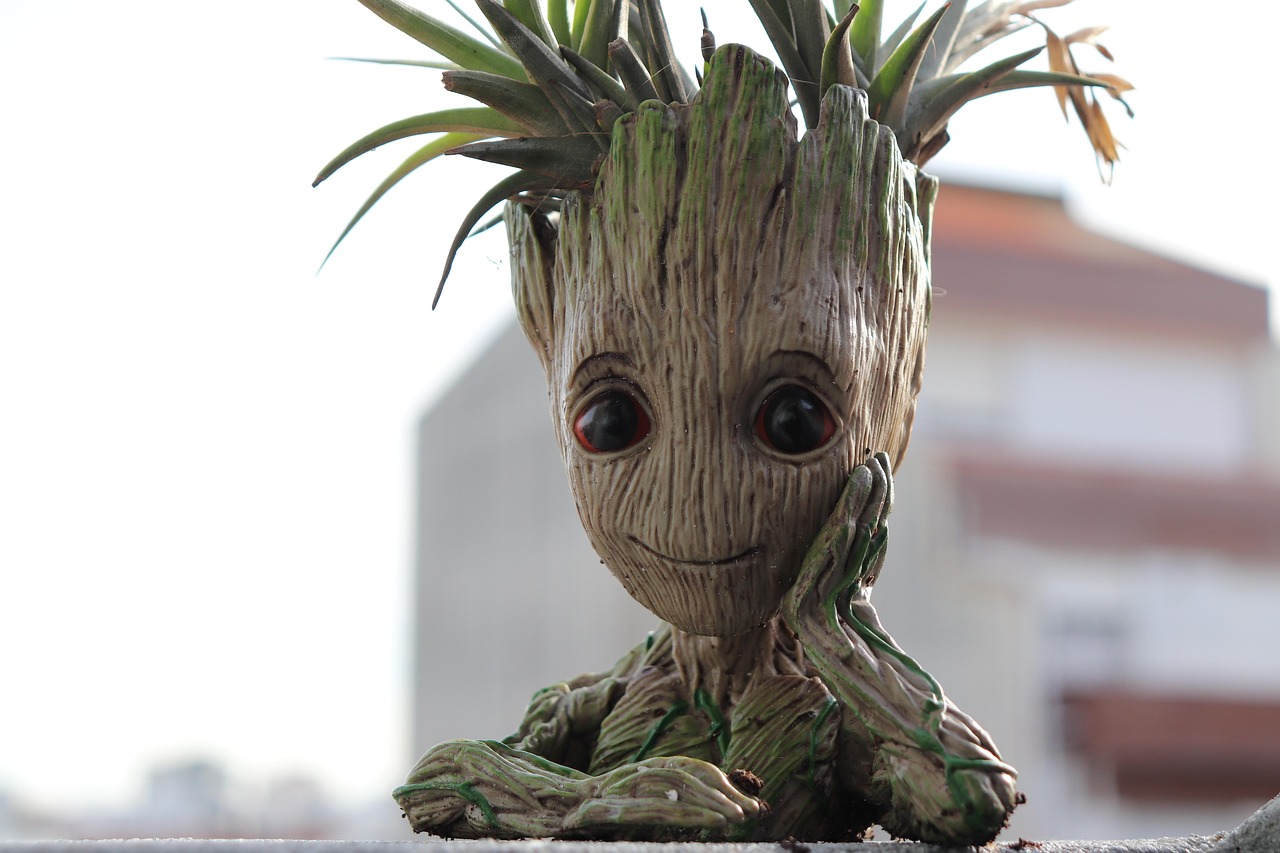
This post contains spoilers for Guardians of the Galaxy.
At the end of Guardians of the Galaxy, Groot—a sapient tree with a three-word vocabulary—dies. They take a splinter from his…trunk, I guess?…and put it in a pot, from which springs Baby Groot.
There was a debate among fans as to whether Baby Groot is Groot regenerated, or if Baby Groot is an entirely new person. If I may weigh in to this debate in 2025: the answer is that it’s unanswerable.
The issue is that personal identity is not clearly defined in edge cases, so we can’t say whether Groot and Baby Groot are the same person.
In some cases, personal identity is unambiguous. For example, I am the same person as the Michael Dickens of 2010. There are a few reasons why I believe this:
- My name is Michael Dickens. His name is Michael Dickens.
- It’s possible to trace a physical lineage from me to him where today’s Michael is made up of almost all the same molecules as yesterday’s Michael and looks almost identical.
- I have memories of 2010 Michael, and I have memories of his memories.
- My personality and interests are very similar to his.
- He and I have the same DNA (probably, I haven’t actually checked).
Am I the same person as Sean Connery? Definitely not, because:
- My name is Michael Dickens. His name was Sean Connery.
- There is not much overlap in the molecules that make up my body and that made up the body of Sean Connery.
- Sean Connery has starred in many films, including portraying the original James Bond. I’ve never played James Bond in a film.
- I don’t have any memory of having ever been Sean Connery, and I’m pretty sure he has no memory of having ever been me.
- I don’t know a lot about Sean Connery’s personality, but I think it’s pretty different from mine.
I am the same person as the Michael Dickens of 2010, because we line up on approximately every measure of personal identity. But I am not the same person as Sean Connery, because we don’t line up on any such measures.
What happens when we try to compare Groot and Baby Groot in this way? When we start asking questions about their identities, we don’t get a consistent answer.
- Can you trace a physical lineage between them? Yes—Baby Groot grew out of a splinter that came from Groot’s body. But Baby Groot’s body is mostly new. I don’t know how groot physiology works, but it seems that Groot dies when his head is destroyed, suggesting he has some sort of brain; and Baby Groot has a totally distinct brain. But perhaps groots have some sort of distributed neural system, where the splinter that contained Baby Groot contained a piece of groot-brain.
- As portrayed in Guardians of the Galaxy 2 and in Avengers: Infinity War, Baby Groot seems to have no memory of having previously been Groot.
- The two characters have very different personalities.
- Do Groot and Baby Groot have the same DNA? I don’t think there’s a canon answer, but my guess would be yes.
- What is Baby Groot’s name? He makes it pretty clear that his name is Groot. (Which is also Groot’s name!)
What is the most important factor for defining personal identity? If it’s memory, then Groot and Baby Groot are different. If it’s direct physical lineage, then it’s actually unclear because it depends on how much of a lineage you need. If the splinter that grew Baby Groot is part of the “essence” of Groot, then you could use that to argue that they’re the same person.
But if Alice thinks personal identity is about memory, and Bob thinks it’s about physical continuity, then Alice will think Baby Groot is a new person, and Bob will think Baby Groot is Groot. They won’t be able to agree unless they can reconcile their definitions of personal identity.
Alice and Bob disagree about Baby Groot’s identity, but they don’t disagree about any concrete facts about the universe. They agree that Baby Groot doesn’t have the same memory, and they agree that there was some physical continuity between the two beings (or, according to Bob, the one being).
In this kind of situation, I prefer to say that the answer doesn’t matter—it’s a question of how you define the words, not a question about reality.